
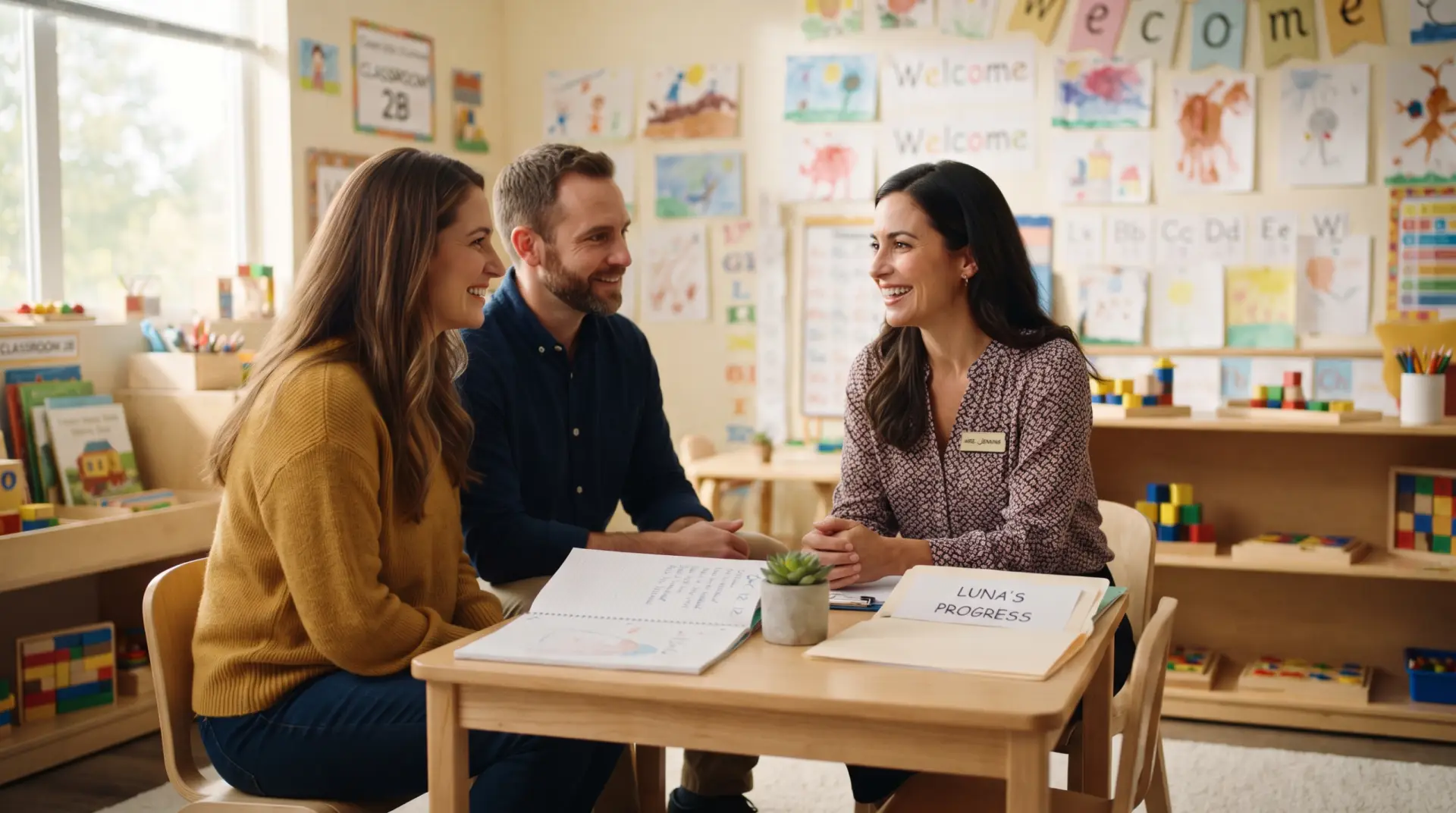
Hearing that your child’s teacher has concerns about their development can feel overwhelming. You may wonder whether the concerns are serious, whether your child simply needs more time, or what steps you should take next.
While these conversations can be emotional, they also provide an opportunity to better understand your child’s needs. Teachers observe children every day in structured learning and social environments, making them well positioned to notice patterns that may benefit from further exploration. Their observations are valuable, but they are not a diagnosis.
At Rocky Mountain Psychological Services (RMPS), we have spent more than 30 years helping Calgary families understand their children’s strengths and challenges through comprehensive psychological and psychoeducational assessments. Our goal is to provide clarity, practical recommendations, and the confidence families need to make informed decisions.
Why Teachers Often Notice Developmental Concerns First
School provides a unique environment where children are expected to:
- Follow routines
- Listen to instructions
- Complete academic tasks
- Interact with peers
- Manage emotions independently
- Adapt to changing situations
Because these expectations are consistent across classrooms, teachers often notice when a child struggles in areas that other children of the same age are managing comfortably.
Research shows that teacher observations play an important role in identifying developmental, behavioural, and learning difficulties early, particularly when combined with information from parents and standardized assessments (Glascoe, 2000).
However, one observation alone does not automatically mean a child has a developmental disorder.
Many factors can temporarily affect behaviour, including:
- Lack of sleep
- Anxiety
- Family changes
- Illness
- Language differences
- Learning style
- Stress
This is why comprehensive assessment is so important before reaching conclusions.
Common Concerns Teachers May Raise
Every child develops differently, but some concerns appear more frequently than others.
Difficulty Paying Attention
A teacher may notice that your child:
- Frequently loses focus
- Has difficulty following instructions
- Seems easily distracted
- Leaves work unfinished
- Appears constantly “on the go”
While these behaviours may be associated with Attention-Deficit/Hyperactivity Disorder (ADHD), they can also result from anxiety, learning difficulties, sleep issues, or emotional stress (American Psychiatric Association, 2022).
A professional assessment helps identify the underlying cause rather than simply focusing on the behaviour.
Academic Struggles
Teachers may report that your child is:
- Falling behind in reading
- Struggling with writing
- Having difficulty understanding math concepts
- Taking much longer than classmates to complete work
Persistent academic challenges may indicate a learning disorder, but they can also reflect attention difficulties, language processing differences, intellectual profiles, or gaps in foundational learning.
Research has consistently shown that early identification of learning difficulties improves long-term educational outcomes (Snowling & Hulme, 2012).
Social Difficulties
Sometimes concerns relate more to peer relationships than academics.
Examples include:
- Difficulty making friends
- Playing alone most of the time
- Trouble understanding social cues
- Frequent conflicts with classmates
- Difficulty participating in group activities
Social challenges can have many causes, including anxiety, communication differences, developmental conditions, or temperament.
Understanding why these difficulties occur is essential before deciding on appropriate supports.
Emotional Regulation
Teachers may notice that your child:
- Becomes overwhelmed easily
- Cries frequently
- Has frequent emotional outbursts
- Struggles with transitions
- Appears unusually anxious
Children often express emotional distress differently at school than at home.
Sometimes classroom demands highlight challenges that parents may not regularly observe.
Communication Concerns
Teachers sometimes notice differences in:
- Understanding instructions
- Expressing ideas
- Participating in discussions
- Conversational skills
- Vocabulary development
Communication differences may warrant further evaluation, particularly when they interfere with learning or peer relationships.
Stay Calm and Listen Carefully
Receiving unexpected feedback can feel overwhelming.
Your first reaction may be to explain away the concerns or compare your child with siblings or cousins.
Instead, try to approach the conversation with curiosity.
Helpful questions include:
- Can you give specific examples?
- When do these behaviours usually occur?
- How often do you notice them?
- Have these concerns changed over time?
- Are there situations where my child does particularly well?
Specific examples are much more informative than general statements like “they seem behind.”
Gathering detailed observations provides valuable information for any future assessment.
What Not to Do After the Conversation
One of the hardest parts of hearing concerns about your child’s development is knowing how to respond. While every situation is different, avoiding a few common mistakes can make the process much smoother.
Try not to:
- Dismiss the teacher’s observations without asking for examples.
- Compare your child to siblings or other children, as every child develops differently.
- Assume there is a specific diagnosis based on internet searches.
- Delay seeking support if concerns continue over time.
- Discuss the concerns in a way that makes your child feel blamed or “different.”
Instead, view the conversation as the first step in gathering information. Early understanding often leads to better support and better outcomes for children.
Compare School and Home Experiences
Many parents are surprised when teachers describe behaviours they rarely see at home.
This does not necessarily mean either perspective is wrong.
Children behave differently depending on:
- Expectations
- Environment
- Social demands
- Stress levels
- Familiarity
- Structure
For example, a child may appear calm during one-on-one activities at home but struggle significantly in a classroom of 25 students.
A comprehensive evaluation considers information from multiple settings to build a complete understanding of the child.
Avoid Jumping to Conclusions
It can be tempting to search online and assume a particular diagnosis.
Unfortunately, many developmental conditions share overlapping symptoms.
For example:
- ADHD and anxiety often affect attention.
- Autism and social anxiety may both impact social interaction.
- Learning disorders can resemble motivation problems.
- Executive functioning difficulties may appear as laziness.
Research has demonstrated that comprehensive multidisciplinary assessment provides much greater diagnostic accuracy than relying on isolated symptoms alone (Johnson et al., 2014).
Rather than focusing on labels, focus on understanding your child’s unique profile.
Keep Communicating with the School
Teachers and parents work best as partners.
If concerns have been raised:
- Stay in regular communication.
- Share relevant information from home.
- Ask what strategies are working in class.
- Discuss any accommodations already being tried.
- Keep notes about changes over time.
Schools can often implement practical supports while families pursue further evaluation.
How Parents Can Support Their Child While Waiting for an Assessment
If you’ve decided to pursue an assessment, there are several ways you can support your child in the meantime.
Continue maintaining predictable routines at home, encourage open conversations about school, celebrate your child’s strengths, and stay in regular contact with their teacher. Small classroom adjustments, such as additional instructions, movement breaks, or visual supports, may also help while more information is being gathered.
Most importantly, reassure your child that everyone learns differently. Avoid focusing on labels or comparing them to classmates. Building confidence and maintaining a positive relationship with learning can have a meaningful impact regardless of the assessment outcome.
When Is a Psychological Assessment Helpful?
Not every concern requires formal assessment.
However, an assessment becomes valuable when concerns:
- Continue over several months
- Affect academic progress
- Interfere with friendships
- Impact emotional wellbeing
- Occur across multiple settings
- Persist despite classroom supports
Rather than simply identifying whether something is “wrong,” psychological assessment explain why challenges are occurring and identify practical solutions.
What Happens During an RMPS Assessment?
At RMPS, we understand that every child is unique.
Our assessments are designed to answer parents’ questions with clarity, compassion, and evidence-based practice.
Depending on your child’s needs, an assessment may include:
- Clinical interviews
- Standardized cognitive testing
- Standardized academic achievement testing
- Behavioural questionnaires
- Executive functioning measures
- Attention assessments
- Social-emotional evaluation
- Parent and teacher input
By combining information from multiple sources, we develop a comprehensive picture of your child’s learning, development, and emotional functioning.
Our goal is not simply to provide a diagnosis when appropriate, but to identify strengths, explain challenges, and offer meaningful recommendations that families and schools can use.
Supporting Families Beyond the Assessment
Receiving assessment results is often just the beginning.
Families frequently ask:
- What happens next?
- How do we support our child?
- What should the school know?
- What accommodations are appropriate?
At RMPS, our psychologists provide clear recommendations that help parents and educators work together to support each child’s success.
Our reports are designed to guide practical decision-making rather than simply describe test results.
Training Future Assessment Professionals Through Lighthouse
RMPS is also committed to strengthening psychological assessment across the profession.
Through our professional training division, Lighthouse, we provide clinical supervision and formal assessment training for provisional and early-career psychologists. By contributing to the education of future psychologists, we remain actively engaged in advancing best practices in psychological assessment while maintaining the high standards families have trusted for decades.
This ongoing commitment ensures our practice remains informed by current research, evolving assessment methods, and the highest standards of clinical care.
Early Understanding Leads to Better Outcomes
One of the biggest misconceptions parents have is that waiting will avoid unnecessary worry.
While some children naturally catch up developmentally, others benefit significantly from early identification and intervention.
Research consistently shows that earlier assessment and targeted support improve academic achievement, social functioning, and long-term wellbeing (Dawson et al., 2010; Snowling & Hulme, 2012).
Seeking an assessment does not mean expecting a diagnosis.
Instead, it provides answers that help families make informed decisions with confidence.
Final Thoughts
Hearing concerns from your child’s teacher can be emotional, but it should not be viewed as a judgment of your parenting or your child’s potential.
Instead, think of it as the beginning of an important conversation.
Teachers offer valuable observations, parents provide essential context, and comprehensive psychological assessments bring these perspectives together to create a complete understanding of your child’s needs.
For more than 30 years, RMPS has helped families navigate these conversations with confidence through thorough, evidence-based psychological assessments. Whether concerns involve learning, attention, emotional wellbeing, behaviour, or development, our experienced psychologists work collaboratively with families and schools to provide clear answers and practical recommendations.
When children receive the right understanding and support at the right time, they are better equipped to succeed both in school and beyond.
References
American Psychiatric Association. (2022). Diagnostic and Statistical Manual of Mental Disorders (5th ed., text rev.; DSM-5-TR). American Psychiatric Publishing.
Dawson, G., Rogers, S., Munson, J., Smith, M., Winter, J., Greenson, J., Donaldson, A., & Varley, J. (2010). Randomized, controlled trial of an intervention for toddlers with autism: The Early Start Denver Model. Pediatrics, 125(1), e17-e23.
Glascoe, F. P. (2000). Evidence-based approach to developmental and behavioural surveillance using parents’ concerns. Child: Care, Health and Development, 26(2), 137-149.
Johnson, C. P., Myers, S. M., & Council on Children With Disabilities. (2014). Identification and evaluation of children with autism spectrum disorders. Pediatrics, 120(5), 1183-1215.
Snowling, M. J., & Hulme, C. (2012). Annual Research Review: The nature and classification of reading disorders. Journal of Child Psychology and Psychiatry, 53(5), 593-617.