
At Rocky Mountain Psychological Services, we understand that adolescence is a transitional period of growth and change. It’s a time of significant physical, cognitive, and psychological development. Teens face pressures related to academics, social relationships, identity, and family expectations. All these challenges can lead to difficulties such as depression, anxiety, low self-esteem, or behavioral concerns. Taking professional support through counselling for teens can provide clarity, guidance, and healthier ways of coping.
RMPS psychologists use their clinical skills first to engage the teenager, then decide whether the best approach to address the issue is traditional talk therapy or other modalities, such as expressive arts, sand, or other modalities.
We not only address difficulties in our teenage counselling but also help teens recognize their strengths and build confidence. By providing teens with a safe and supportive environment, we give them freedom to explore their emotions and experiences openly, without fear of judgment. Our psychologists tailor therapy to teens’ needs, to help sessions feel meaningful and effective.
Counselling helps teens learn strategies that can help them manage stress, regulate emotions, and improve their communication. All these skills support them with building stronger relationships with peers and family members, and teach them how to face life challenges with confidence. Parents are involved when appropriate, allowing progress made in sessions to be supported at home and school.
With the right support, counselling helps teens move beyond short-term struggles and develop the confidence, awareness, and coping strategies they need to thrive in the future.
Neurofeedback, also called EEG biofeedback or neurotherapy, makes use of the brain’s capacity for change to reshape brain networks. This therapy has a growing body of research suggesting this can be helpful for sharpening attention, reducing anxiety and tension, enhancing mood, and improving learning and behavior. You and your teen will see their progress in black and white.
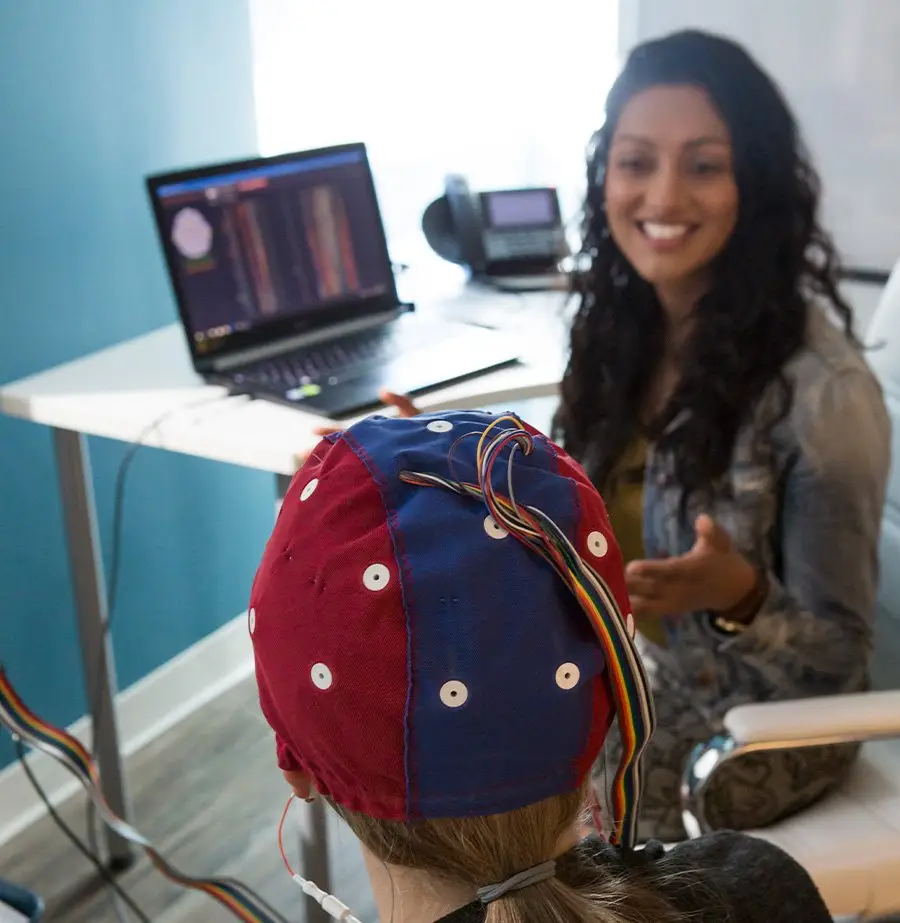
Teenagers are in an emotional developmental phase where they may find it difficult to regulate their emotions. They are learning to manage emotions but also have more on their plate than they did back when they were younger. Neurofeedback therapy is different from traditional approaches in that it trains the brain to self-regulate. During sessions, sensors are placed on the scalp to measure brainwave activity. The teen then engages in simple tasks or games while receiving real-time feedback about how their brain is functioning. Over time, the brain learns to adopt healthier patterns, often leading to noticeable improvements in attention, emotional balance, and self-control.
At RMPS, we integrate neurotherapy into a broader treatment plan to ensure that it meets a teenager’s unique needs. Whether a teenager is struggling with ADHD, depression, anxiety, or academic challenges, this approach can complement traditional counselling and other therapeutic methods. Parents appreciate the measurable results, as progress is tracked before, during, and after sessions.
By combining clinical expertise with innovative brain-based techniques, neurotherapy empowers teens to build resilience, regulate emotions more effectively, and perform better both academically and socially. It is a powerful option for families seeking long-term solutions that address the root of challenges rather than just the symptoms.
Teens don’t just need quick fixes; they need real tools they can carry for life. That’s where neurotherapy comes in. Blending clinical expertise with brain-based techniques helps teens learn to regulate their emotions, bounce back when things get tough, and face life challenges with more resiliency. For families, it’s not just about easing the surface struggles but digging deeper and building lasting change.

Assessments are a formal way of measuring how well your teen is functioning compared to others in their age group. They provide valuable insight into areas such as learning, behavior, and emotional well-being. Families often seek assessments to help address concerns related to school, but they can also be used to shed light on behavioral, emotional, or relational problems that may be impacting the teen at home, in social groups, or during extracurricular activities such as clubs and sports.
At RMPS, our psychologists work closely with teens and parents to make sure that the assessment is specifically tailored to their unique needs. Our evaluations identify both strengths and weaknesses where additional support is required. The process often involves a combination of interviews, standardized tests, and observations to create a clear picture of your teen’s functioning.
Assessments can answer important questions, such as:
Once completed, we explain results clearly to parents and teenagers and talk about what the results mean for everyday life. From there, we talk about next steps and recommendations. The recommendations may include targeted interventions, school accommodations, and/or therapy services. Our team ensures that feedback is actionable, helping families and educators apply strategies that make a real difference in everyday life.
By providing a deeper understanding of your teen’s challenges and potential, assessments serve as the foundation for personalized treatment and ongoing growth. They empower families to take informed steps toward supporting their teens’ long-term well-being and success.
Counselling for teens provides support in managing stress, depression, low self-esteem, and behavioral issues. It also helps teenagers develop coping skills, improve communication, and build stronger relationships at home and school.
If your teen is showing signs of academic struggles, mood changes, withdrawal, anger outbursts, or difficulty managing emotions, these could be reasons for an assessment or counseling supports. A consultation with a psychologist can help you decide your next best step.
Neurotherapy, also known as neurofeedback, can help teens improve emotional regulation, focus, and self-control by training the brain to adopt healthier patterns. It can be beneficial for anxiety, ADHD, depression, and learning challenges, providing long-term results.
A psychologist who works with teens creates a safe and supportive environment where your child can explore their feelings and challenges without judgment. Using evidence-based therapies, they help teens develop different perspectives and skills to address their challenges
Yes. At RMPS, parents are included when appropriate to ensure that progress made in sessions is supported at home and school. This collaboration helps create consistency, strengthens family relationships, and maximizes the effectiveness of counselling.
Cassandra Hillman White is the Owner and Clinical Director of Rocky Mountain Psychological Services (RMPS). A Registered Psychologist with more than 30 years of experience, Cassandra works with children, adolescents, parents, and families facing a wide range of developmental, emotional, behavioural, learning, and mental health challenges. She is known for her thoughtful case conceptualization, collaborative approach, and commitment to helping families understand both the challenges they are facing and the path forward.
Cassandra’s career began working with children with special needs and their families throughout Central Alberta. From supporting parents in their homes to consulting with daycare and preschool programs, she developed a deep appreciation for the importance of relationships, developmental understanding, and practical strategies that families and educators can use in everyday life. These early experiences continue to shape her work today.
Throughout her career, Cassandra has pursued extensive training across multiple therapeutic approaches, allowing her to tailor treatment to each client’s unique needs. Her clinical background includes Cognitive Behavioural Therapy (CBT), Internal Family Systems (IFS), Synergetic Play Therapy, Jungian Sandplay, Neurofeedback, Adlerian Therapy, Adlerian Play Therapy, and the Play Therapy Dimensions Model. While she draws from a variety of evidence-informed approaches, Adlerian principles and play therapy frameworks have become particularly influential in her current work with children and families.
Cassandra believes that effective therapy begins with understanding the whole person. Rather than focusing solely on symptoms, she works collaboratively with clients and families to explore the factors contributing to current challenges, identify strengths, and develop meaningful goals. She values creating clear treatment plans that are reviewed and adjusted over time, ensuring clients remain active participants in their own growth and healing.
As Clinical Director, Cassandra leads a multidisciplinary team dedicated to supporting children, adolescents, and families across complex presentations, including anxiety, depression, ADHD, autism, learning difficulties, emotional regulation concerns, trauma, behavioural challenges, and family relationship difficulties. She also works closely with schools, physicians, allied health professionals, and community agencies to help families access coordinated and effective support.
In addition to her clinical work, Cassandra serves as President of the Council of the College of Alberta Psychologists and is a Canadian Certified Play Therapist. She brings her commitment to ethical practice, professional excellence, and lifelong learning into every aspect of her work.
Outside of the office, Cassandra enjoys spending time with her four adult children, exploring nature, travelling, and continuing to learn. Her curiosity about people and their stories remains at the heart of the work she has loved for more than three decades.

Raquel is an Office Administrator at RMPS. Back in Brazil, her home country, she graduated as a Psychologist and worked as a clinician for the past 5 years. Although she loved working with children and adults, she discovered a new passion: manage the administrative tasks that keep the business running.
As someone who is passionate about learning new things and developing new skills, with the career transition also came the decision to live abroad and explore a new culture. To serve empathetically and connect with people is Raquel’s main personal and professional goal.
Amanda is a Registered Psychologist with the College of Alberta Psychologists. Amanda earned her doctoral degree in Psychology at Brock University in Ontario in 2017, with a specialization in developmental psychology. Amanda provides formal assessment services at RMPS.
Since 2009, Amanda has received formal training and work experience in private practice settings in conducting psycho-educational assessments for students ranging from preschool through university. Amanda is skilled at test administration, interpretation of data, and report writing for various referral questions including ADHD, Learning Disorders, Autism Spectrum Disorder, Anxiety, Giftedness, and Intellectual Disabilities. Amanda enjoys working with people of all ages from diverse backgrounds, and she tries to make the testing environment feel relaxed and comfortable while maintaining integrity in testing protocol.
Zara is a Psychometrist/Psychological Assistant at RMPS. She completed her Bachelor of Science in Psychology at the University of Calgary and her Graduate Diploma in Psychological Assessment at Concordia University of Edmonton.
Zara has spent over five years working alongside children, adolescents, and their families in a variety of settings. These include public and private schools, in-home support, residential programs, early-intervention programs, and non-profit organizations. Currently, Zara is part of the assessment and neurotherapy team. As a lifelong learner, Zara plans to go back to graduate school and eventually become a psychologist one day.