Rather than simply providing a diagnosis, a high-quality autism assessment should give individuals and families the answers they need to move forward with confidence.
At Rocky Mountain Psychological Services (RMPS), we’ve spent more than 30 years helping children, adolescents, and adults better understand their cognitive, behavioural, and developmental profiles through comprehensive psychological assessments and therapeutic interventions. RMPS combines decades of diagnostic expertise with access to a broader network of therapeutic and educational supports, making the transition from assessment to intervention as seamless as possible.
Whether you’re seeking an autism assessment for your child or yourself, our experienced team of Registered and Provisional Psychologists provides evidence-based evaluations designed to identify strengths, clarify challenges, and offer practical recommendations tailored to each individual’s needs.
In this guide, we’ll walk you through what to expect before, during, and after an autism assessment, so you can approach the process with clarity and confidence.
Why Consider an Autism Assessment?
Autism Spectrum Disorder (ASD) is a neurodevelopmental condition that affects communication, social interaction, behaviour, and sensory processing. Because autism presents differently in every individual, there is no single “autism profile.”
Some children show differences in early childhood, while others are not identified until they begin school or during school. Many adults also seek an assessment after recognizing lifelong patterns that were never fully understood.
Some common reasons people pursue an autism assessment include:
- Delayed speech or language development
- Difficulty with social interactions or friendships
- Repetitive behaviours or intense interests
- Sensory sensitivities to sound, light, clothing, or food
- Difficulty adapting to changes in routine
- Challenges understanding social cues or conversations
- Feeling socially exhausted or “different” from others
Research shows that early identification allows individuals to access appropriate supports sooner, leading to better developmental and adaptive outcomes (Zwaigenbaum et al., 2015).
Before the Autism Assessment
A comprehensive autism assessment begins well before testing day. At RMPS, we take the time to understand the individual’s history, current concerns, and goals so that the assessment reflects their unique experiences.
Initial Consultation
The first step is meeting with one of our psychologists to discuss the reason for the referral.
Depending on the individual’s age, this conversation may cover:
- Developmental history
- Current concerns
- Medical and family history
- School or workplace experiences
- Previous assessments or therapies
- Daily functioning
For adults, discussions may also include employment, relationships, executive functioning, and mental health history.
This consultation allows us to determine the most appropriate assessment approach for each individual.
Background Information
Before the evaluation, parents, caregivers, or the individual may complete standardized questionnaires that explore communication, behaviour, adaptive functioning, emotional regulation, and social skills.
For school-aged children, teacher questionnaires may also be requested because autism characteristics often appear differently across home and school environments.
Whenever available, previous reports such as school records, speech-language assessments, occupational therapy reports, or psychological evaluations are reviewed to provide additional context.
The National Institute for Health and Care Excellence (2021) recommends gathering information from multiple sources to improve diagnostic accuracy.
During the Autism Assessment
One of the biggest misconceptions is that autism can be diagnosed through a single test.
Instead, psychologists combine information from several evidence-based assessment methods to determine whether an individual meets the diagnostic criteria outlined in the Diagnostic and Statistical Manual of Mental Disorders (DSM-5-TR).
Every assessment is individualized based on the person’s age, developmental level, communication abilities, and specific concerns.
Clinical Interview
The clinical interview is one of the most important parts of the assessment.
Parents may be asked about early milestones, language development, play, friendships, routines, emotional regulation, and sensory preferences.
Adults often discuss childhood experiences, education, work history, relationships, communication, and everyday challenges.
Rather than focusing on isolated behaviours, the psychologist looks for lifelong patterns that are consistent with Autism Spectrum Disorder.
Behavioural Observation
Observation plays an important role in autism assessments.
Psychologists observe how an individual communicates, interacts, solves problems, responds to social situations, and engages with others.
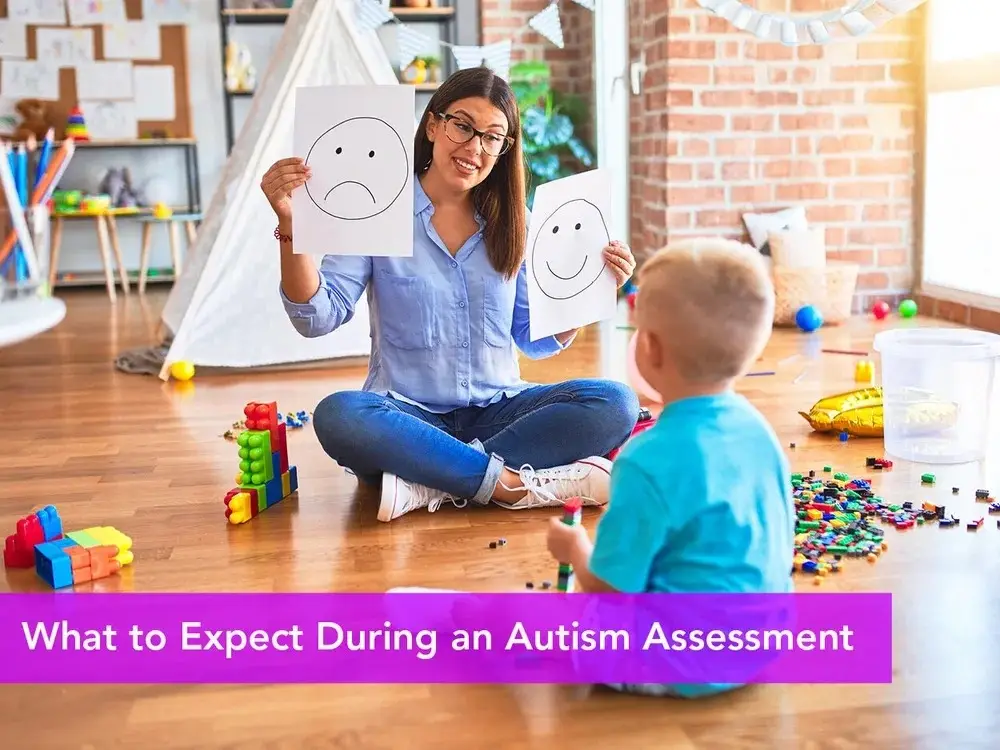
For younger children, observations may include structured play activities.
For adolescents and adults, conversations and interactive tasks provide opportunities to evaluate social communication skills and behavioural patterns.
Importantly, psychologists recognize that many autistic individuals actively “mask” or camouflage their difficulties, especially girls, women, and high-functioning adults.
Research has shown that masking can delay diagnosis and contribute to increased anxiety, depression, and emotional exhaustion (Hull et al., 2020).
Standardized Assessment Tools
Autism assessments often include standardized measures that evaluate areas such as:
- Social communication
- Behaviour patterns
- Cognitive functioning
- Adaptive skills
- Emotional functioning
- Attention and executive functioning
These tools are never used in isolation. Instead, psychologists integrate test results with interviews, observations, questionnaires, and developmental history before reaching a diagnosis.
The Canadian Paediatric Society recommends combining standardized measures with experienced clinical judgment when assessing autism (Brian et al., 2019).
Looking Beyond Autism
Many individuals referred for an autism assessment also experience other conditions that can influence behaviour and daily functioning.
These may include:
- ADHD
- Anxiety
- Depression
- Learning disabilities
- Language disorders
- Intellectual disabilities
Because these conditions often overlap, a comprehensive psychological assessment helps determine whether autism is present on its own or alongside another diagnosis. Studies have shown that co-occurring conditions are common among autistic individuals, making thorough assessment especially important (Lai et al., 2019).
After the Autism Assessment
Once testing has been completed, the psychologist reviews all of the information collected throughout the assessment.
Rather than relying on a single score, the findings from interviews, observations, questionnaires, standardized assessments, and developmental history are carefully integrated to determine whether the individual meets the DSM-5-TR diagnostic criteria for Autism Spectrum Disorder.
Whether autism is confirmed or another explanation better accounts for the presenting concerns, the goal is always to provide clarity and practical guidance.
Your Assessment Report
Following the evaluation, you will receive a detailed psychological report outlining:
- Background information
- Assessment procedures
- Behavioural observations
- Test results
- Diagnostic conclusions
- Individual strengths
- Personalized recommendations
For children, recommendations may include school accommodations, speech-language therapy, occupational therapy, behavioural supports, or parent strategies.
For adults, recommendations may focus on workplace accommodations, mental health supports, executive functioning strategies, or community resources.
This report can also be shared with physicians, schools, therapists, or other professionals involved in ongoing care.
Feedback and Next Steps
Receiving the results of an autism assessment can bring many emotions. Some families feel relief after finally understanding their child’s experiences, while adults often describe finally having an explanation for challenges they have experienced throughout life.
During the feedback session, your psychologist will explain the assessment findings, answer your questions, and discuss recommendations tailored to your needs.
At RMPS, we view the assessment as the beginning of the journey, not the end. Our goal is to ensure you leave with a clear understanding of the results and confidence in your next steps.
Why Early Assessment Matters
While autism can be diagnosed at any age, earlier identification often leads to earlier access to interventions and supports that promote positive outcomes.
Research has shown that early diagnosis is associated with improvements in communication, adaptive functioning, social development, and overall quality of life when appropriate supports are introduced (Dawson et al., 2010).
However, it is equally important to recognize that adolescents and adults also benefit significantly from receiving an accurate diagnosis. Many adults report improved self-understanding, increased self-acceptance, and better access to workplace or educational accommodations after being formally diagnosed (Leedham et al., 2020).
Regardless of age, understanding one’s neurodevelopmental profile allows individuals and families to make informed decisions about education, employment, healthcare, and future planning.
Why Choose RMPS for an Autism Assessment in Calgary?
Choosing the right assessment provider is an important decision.
With more than 30 years of experience conducting psychological assessments, Rocky Mountain Psychological Services is committed to delivering comprehensive, evidence-based evaluations tailored to each individual’s unique needs.
Our registered and provisional psychologists take the time to understand the whole person, not just a checklist of symptoms. Every assessment combines clinical expertise, current research, and personalized recommendations designed to support success at home, school, work, and within the community.
From your first consultation to the feedback session, our team provides compassionate care, clear communication, and practical guidance so you feel supported throughout the entire process.
Final Thoughts
Seeking an autism assessment is an important step toward understanding yourself or your loved one. While the process may seem overwhelming at first, a comprehensive evaluation provides valuable answers that extend far beyond a diagnosis.
At Rocky Mountain Psychological Services (RMPS), we are committed to helping individuals and families gain clarity through thorough, evidence-based assessments backed by more than three decades of experience. Whether the evaluation confirms Autism Spectrum Disorder or identifies another explanation for the challenges being experienced, our goal is always the same: to provide accurate answers, individualized recommendations, and compassionate support that empowers you to move forward with confidence.
Autism Assessment in Calgary, Alberta
Getting an accurate diagnosis is the first step toward understanding and supporting autism. Our experienced team provides thorough autism assessment services that help identify strengths, challenges, and the best support strategies for your child. Early assessment and intervention can make a significant difference.
References
Brian, J. A., Bryson, S. E., Garon, N., Roberts, W., Smith, I. M., Szatmari, P., & Zwaigenbaum, L. (2019). Paediatrics & Child Health, 24(7), 444–451.
Dawson, G., Rogers, S., Munson, J., et al. (2010). Randomized, controlled trial of an intervention for toddlers with autism: The Early Start Denver Model. Pediatrics, 125(1), e17–e23.
Hull, L., Petrides, K. V., Allison, C., et al. (2020). Social camouflaging in adults with autism spectrum conditions. Journal of Autism and Developmental Disorders, 50(8), 2519–2534.
Lai, M. C., Kassee, C., Besney, R., et al. (2019). Prevalence of co-occurring mental health diagnoses in the autism population. The Lancet Psychiatry, 6(10), 819–829.
Leedham, A., Thompson, A. R., Smith, R., & Freeth, M. (2020). The experiences of females receiving an autism diagnosis in adulthood. Autism, 24(1), 135–146.
National Institute for Health and Care Excellence. (2021). Autism spectrum disorder in under 19s: Recognition, referral and diagnosis (CG128).
Zwaigenbaum, L., Bauman, M. L., Fein, D., et al. (2015). Early screening of autism spectrum disorder. Pediatrics, 136(Suppl. 1), S41–S59.