
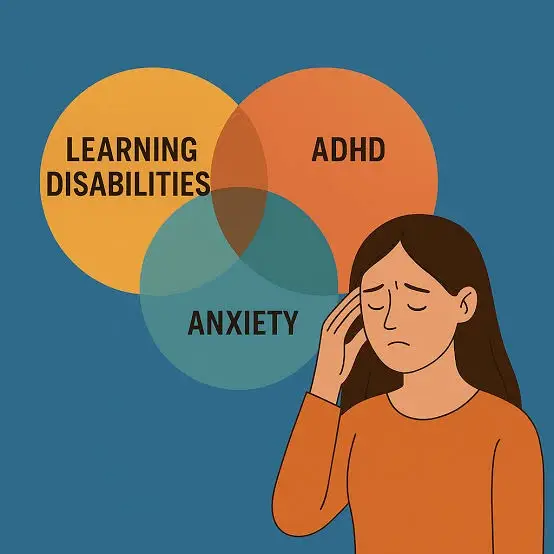
As a parent, noticing that your child is struggling can be both confusing and overwhelming. Perhaps they’re finding it difficult to concentrate in class, becoming easily frustrated with schoolwork, avoiding social situations, or experiencing emotional outbursts that seem disproportionate to the situation. You may wonder whether these challenges are simply part of growing up or signs of an underlying condition that requires professional support.
One of the biggest challenges for parents is that many developmental, emotional, and learning conditions present with similar behaviours. Difficulty paying attention, poor academic performance, emotional dysregulation, social challenges, and sensory sensitivities can all appear across multiple diagnoses. While online checklists and social media can raise awareness, they often oversimplify complex conditions and make it even harder to determine what is really happening.
At Rocky Mountain Psychological Services (RMPS), we regularly meet families who come to us asking one important question:
“Does my child have ADHD, autism, anxiety, a learning disability, or something else entirely?”
Why These Conditions Are Often Confused
Children rarely fit neatly into diagnostic categories. A child who struggles to focus may not necessarily have ADHD. Likewise, a child who avoids schoolwork may not simply dislike learning. The same behaviour can have very different underlying causes.
For example:
- A child with ADHD may lose focus because of executive functioning difficulties.
- A child with anxiety may appear distracted because they’re consumed by worry.
- A child with autism may struggle to engage because they’re processing sensory information differently or interpreting social interactions in unique ways.
- A child with a learning disability may avoid reading or math because those tasks require significantly more effort than expected for their age.
Research consistently shows that neurodevelopmental and mental health conditions frequently co-occur. According to Hyman et al. (2020), children with developmental disorders often experience overlapping emotional, behavioural, and learning challenges that require careful multidisciplinary evaluation. This is why relying on a single symptom rarely leads to an accurate understanding of a child’s needs.
Understanding ADHD: More Than Just Hyperactivity
Attention-Deficit/Hyperactivity Disorder (ADHD) is one of the most common neurodevelopmental conditions diagnosed during childhood. While many people associate ADHD with hyperactivity, the condition actually affects how the brain regulates attention, impulse control, working memory, organization, and self-management.
Common signs of ADHD include:
- Difficulty maintaining attention
- Frequently losing or forgetting belongings
- Trouble following multi-step instructions
- Impulsivity
- Interrupting conversations
- Difficulty waiting for turns
- Restlessness or excessive movement
- Poor organization
- Inconsistent academic performance
- Emotional impulsivity or frustration
Importantly, these behaviours must occur across multiple settings, such as home and school, and interfere with everyday functioning before ADHD is diagnosed.
Research by Barkley (2015) highlights that executive functioning difficulties are central to ADHD. Rather than simply struggling to pay attention, children often have difficulty regulating their behaviour, emotions, planning, and self-monitoring, all of which can affect learning and relationships.
Understanding Autism Spectrum Disorder
Autism Spectrum Disorder (ASD) is a neurodevelopmental condition that affects social communication, behaviour, sensory processing, and flexibility in thinking. Every autistic child is different, which is why autism is described as a spectrum.
Parents may notice behaviours such as:
- Difficulty understanding social cues
- Limited or inconsistent eye contact
- Strong preference for routines
- Intense interests in specific topics
- Repetitive movements or behaviours
- Sensory sensitivities to sounds, textures, lights, or smells
- Distress during unexpected changes
- Literal interpretation of language
- Difficulty understanding emotions or perspectives of others
While these characteristics often become noticeable in early childhood, many children, particularly girls, develop strategies that mask their differences, resulting in later diagnosis.
According to the Diagnostic and Statistical Manual of Mental Disorders (DSM-5-TR) (American Psychiatric Association, 2022), autism is characterised by persistent differences in social communication alongside restricted or repetitive patterns of behaviour or interests.
Research by Hull et al. (2020) also suggests that autistic girls often camouflage their social challenges more effectively than boys, making comprehensive assessment particularly important when concerns are subtle.
Understanding Anxiety in Children
Feeling nervous before a test or worrying about a new situation is a normal part of childhood. Anxiety becomes a concern when fears become persistent, excessive, and begin interfering with school, friendships, family life, or daily activities.
Children experiencing anxiety often display behaviours that can easily be mistaken for ADHD or autism.
For example, an anxious child may:
- Avoid school
- Frequently complain of headaches or stomachaches
- Seek repeated reassurance
- Become perfectionistic
- Freeze during classroom activities
- Avoid speaking in groups
- Have difficulty sleeping
- Appear distracted
- Become overwhelmed by new situations
Unlike ADHD, where attention difficulties result from executive functioning challenges, anxious children are often distracted because their minds are focused on worries, fears, or anticipated negative outcomes.
The Canadian Paediatric Society (2020) notes that anxiety disorders are among the most common mental health conditions affecting children and adolescents. Early recognition and evidence-based intervention can significantly improve emotional wellbeing and long-term outcomes.
Understanding Learning Disabilities
One of the most misunderstood childhood conditions is a Specific Learning Disorder (SLD). Many parents worry that poor grades mean their child is not trying hard enough or lacks ability. In reality, learning disabilities affect how the brain processes specific types of information, not intelligence.
Children with learning disabilities often have average or above-average intelligence but experience persistent difficulty acquiring academic skills despite appropriate instruction.
Learning disabilities may affect:
- Reading (Dyslexia)
- Writing
- Spelling
- Mathematics (Dyscalculia)
- Written expression
Parents and teachers may notice:
- Reading below expected grade level
- Difficulty decoding words
- Poor spelling despite practice
- Trouble remembering math facts
- Slow written work
- Avoidance of homework
- Frustration during academic tasks
- Declining confidence at school
Without appropriate support, repeated academic struggles can negatively affect a child’s self-esteem and mental health.
Fletcher et al. (2019) emphasise that early identification and targeted educational intervention substantially improve long-term academic achievement and reduce secondary emotional difficulties.
Why Symptoms Often Overlap
One of the reasons diagnosis can feel confusing is that many behaviours appear across multiple conditions.
For example, difficulty concentrating may result from ADHD, anxiety, autism, or frustration associated with a learning disability. Similarly, emotional outbursts may reflect sensory overload, executive functioning challenges, academic stress, or overwhelming anxiety.
Consider the following examples:
| Behaviour | ADHD | Autism | Anxiety | Learning Disability |
| Difficulty concentrating | ✓ | ✓ | ✓ | ✓ |
| Emotional outbursts | ✓ | ✓ | ✓ | Sometimes |
| Poor academic performance | ✓ | Sometimes | ✓ | ✓ |
| Avoiding schoolwork | ✓ | Sometimes | ✓ | ✓ |
| Difficulty making friends | Sometimes | ✓ | ✓ | Sometimes |
| Restlessness | ✓ | Sometimes | ✓ | Rarely |
It’s also common for children to have more than one diagnosis.
Examples include:
- ADHD alongside anxiety
- ADHD with a Specific Learning Disorder
- Autism with ADHD
- Anxiety developing because of persistent learning difficulties
Research indicates that approximately 30–50% of children diagnosed with ADHD also experience an anxiety disorder, while co-occurring developmental conditions are also common among autistic children (Antshel et al., 2016; Lai et al., 2019).
These overlapping presentations reinforce an important point: behaviour alone rarely tells the full story. Understanding why a child is struggling requires a comprehensive evaluation that considers cognitive, emotional, behavioural, developmental, and academic functioning together.
Why Self-Diagnosis Can Be Misleading
With so much information available online, it’s understandable that many parents begin searching for answers as soon as they notice changes in their child’s behaviour. Social media videos, symptom checklists, and parenting forums can be helpful for raising awareness, but they should never replace a professional evaluation.
Many behaviours associated with ADHD, autism, anxiety, and learning disabilities overlap. A child who seems inattentive may actually be struggling with anxiety. A child who avoids reading may have dyslexia rather than a lack of motivation. Likewise, social withdrawal could be related to autism, anxiety, bullying, or another emotional concern.
Without understanding the underlying reason for a child’s behaviour, it is easy to draw inaccurate conclusions. Misidentification can delay access to appropriate supports and may even lead to interventions that fail to address the child’s actual needs.
Research by Thapar et al. (2017) highlights that neurodevelopmental conditions often exist on a continuum and commonly co-occur, reinforcing the importance of comprehensive clinical assessment rather than relying on behavioural observations alone.
Rather than focusing on a specific label, parents should ask a different question:
“What is making learning, relationships, or everyday life difficult for my child?”
That question allows clinicians to explore the whole child rather than simply matching behaviours to a diagnosis.
Why Comprehensive Assessment Matters
A comprehensive psychological assessment goes far beyond determining whether a child meets the criteria for a particular diagnosis. It examines how a child thinks, learns, communicates, manages emotions, and functions across different environments.
At RMPS, assessments are designed to identify not only areas of difficulty but also each child’s strengths. Understanding these strengths is equally important because they help guide effective interventions and educational planning.
A comprehensive assessment may evaluate:
- Cognitive abilities and intellectual functioning
- Academic achievement
- Attention and executive functioning
- Memory and processing speed
- Language and communication skills
- Emotional wellbeing
- Behavioural regulation
- Social functioning
- Adaptive living skills (when appropriate)
- Sensory concerns and developmental history
Information is gathered from multiple sources, including:
- Parents and caregivers
- Teachers
- Clinical interviews
- Standardized psychological tests
- Behaviour rating scales
- Direct observations
- Previous educational or medical reports
Looking at the complete picture helps ensure that recommendations are based on evidence rather than assumptions.
The National Academies of Sciences, Engineering, and Medicine (2015) emphasize that multidisciplinary, evidence-based assessments improve diagnostic accuracy and support better educational and clinical outcomes for children with developmental and learning concerns.
How RMPS Helps Families Find Answers
At Rocky Mountain Psychological Services (RMPS), we understand that no two children are the same. Every assessment begins with listening carefully to parents’ concerns and learning about the child’s developmental, educational, and emotional history.
Depending on the presenting concerns, our psychologists may recommend assessments that explore:
- ADHD
- Autism Spectrum Disorder
- Specific Learning Disorders
- Anxiety and emotional functioning
- Giftedness
- Cognitive functioning
- Executive functioning
- Social-emotional development
Rather than focusing solely on identifying a diagnosis, our goal is to understand why a child is experiencing challenges and what supports will help them succeed.
Following the assessment, families receive:
- A detailed psychological report
- Clear explanations of assessment findings
- Diagnostic clarification when appropriate
- Practical recommendations for home and school
- Guidance regarding educational accommodations
- Recommendations for therapy or additional services where needed
This information can help parents advocate for their child with greater confidence while providing educators with meaningful strategies to support learning and development.
When Should Parents Consider an Assessment?
Many parents worry about seeking an assessment too early. In reality, obtaining answers sooner often prevents unnecessary frustration and allows children to receive appropriate support before challenges become more significant.
It may be helpful to consider an assessment if your child:
- Continues struggling academically despite extra help
- Frequently avoids school or homework
- Has ongoing attention or concentration difficulties
- Experiences significant emotional outbursts
- Shows persistent anxiety that interferes with daily life
- Has difficulty making or maintaining friendships
- Demonstrates repetitive behaviours or strong resistance to change
- Appears significantly behind peers in reading, writing, or mathematics
- Receives repeated concerns from teachers
- Shows a noticeable decline in confidence or self-esteem
Parents often worry about “putting a label” on their child. However, an accurate diagnosis does not define who a child is, it provides an explanation for their experiences and opens the door to appropriate supports.
Research consistently demonstrates that delayed identification often contributes to poorer academic achievement, increased emotional difficulties, and reduced self-esteem, whereas early intervention is associated with significantly better long-term outcomes (Dawson et al., 2010; Fletcher et al., 2019).
The Benefits of Early Identification
Children who understand why they experience certain challenges often develop healthier self-esteem than those who simply believe they are “bad at school” or “different.”
Early identification allows families, educators, and clinicians to work together to create individualized supports that promote long-term success.
Benefits of early assessment include:
- Improved academic outcomes
- Better emotional wellbeing
- Increased confidence
- Earlier access to school accommodations
- More effective behavioural supports
- Reduced family stress
- Improved social relationships
- Better long-term independence
For example, a child with dyslexia who receives structured literacy intervention early is far more likely to develop effective reading skills than one whose difficulties remain unidentified for several years. Similarly, children with ADHD often benefit from strategies that improve organization and executive functioning before academic demands become increasingly complex.
Likewise, identifying anxiety early allows children to develop coping skills before fears become deeply ingrained, while early autism supports can strengthen communication, adaptive functioning, and social participation.
As highlighted by Zwaigenbaum et al. (2015), timely identification and intervention for neurodevelopmental conditions significantly improve developmental outcomes and family quality of life.
Supporting the Whole Child
While diagnoses can provide valuable direction, they should never become the primary focus. Every child has unique strengths, interests, personality traits, and potential that extend far beyond any diagnostic label.
An assessment should help answer questions such as:
- What does this child do well?
- What barriers are affecting learning or wellbeing?
- Which supports are likely to have the greatest impact?
- How can parents and teachers work together effectively?
- What interventions will help this child reach their full potential?
By understanding both strengths and challenges, families can move forward with greater confidence and clarity.
Final Thoughts
When children struggle with attention, behaviour, emotions, social interactions, or learning, it can be difficult to know exactly what is causing those challenges. ADHD, autism, anxiety, and learning disabilities often share similar signs, and many children experience more than one condition at the same time.
Rather than relying on guesswork or online symptom checklists, a comprehensive psychological assessment provides evidence-based answers that guide meaningful support.
At Rocky Mountain Psychological Services (RMPS), our psychologists work closely with families to understand each child’s unique profile. Through comprehensive assessment, we help identify strengths, clarify diagnoses when appropriate, and provide practical recommendations that empower parents, educators, and children alike.
Every child deserves to be understood, not simply for the challenges they experience, but for the strengths they bring. With the right assessment and the right support, children can build confidence, develop essential skills, and reach their full potential.
References
American Psychiatric Association. (2022). Diagnostic and Statistical Manual of Mental Disorders (5th ed., text rev.; DSM-5-TR). American Psychiatric Publishing.
Antshel, K. M., Zhang-James, Y., Wagner, K. E., Ledesma, A., & Faraone, S. V. (2016). An update on the comorbidity of ADHD and autism spectrum disorder. Expert Review of Neurotherapeutics, 16(3), 279–293.
Barkley, R. A. (2015). Attention-Deficit Hyperactivity Disorder: A Handbook for Diagnosis and Treatment (4th ed.). Guilford Press.
Canadian Paediatric Society. (2020). Anxiety in children and youth: Part 1 – Recognition and assessment.
Dawson, G., Rogers, S., Munson, J., Smith, M., Winter, J., Greenson, J., Donaldson, A., & Varley, J. (2010). Randomized controlled trial of an intervention for toddlers with autism. Pediatrics, 125(1), e17–e23.
Fletcher, J. M., Lyon, G. R., Fuchs, L. S., & Barnes, M. A. (2019). Learning Disabilities: From Identification to Intervention (2nd ed.). Guilford Press.
Hull, L., Petrides, K. V., Allison, C., Smith, P., Baron-Cohen, S., Lai, M. C., & Mandy, W. (2020). “Putting on My Best Normal”: Social camouflaging in adults with autism spectrum conditions. Journal of Autism and Developmental Disorders, 50(3), 889–903.
Hyman, S. L., Levy, S. E., & Myers, S. M. (2020). Identification, evaluation, and management of children with autism spectrum disorder. Pediatrics, 145(1), e20193447.
Lai, M. C., Kassee, C., Besney, R., Bonato, S., Hull, L., Mandy, W., Szatmari, P., Ameis, S. H., & Anagnostou, E. (2019). Prevalence of co-occurring mental health diagnoses in the autism population. The Lancet Psychiatry, 6(10), 819–829.
National Academies of Sciences, Engineering, and Medicine. (2015). Mental Disorders and Disabilities Among Low-Income Children.
Thapar, A., Cooper, M., Eyre, O., & Langley, K. (2017). What have we learnt about ADHD from the last decade of research? Journal of Child Psychology and Psychiatry, 58(1), 3–16.
Zwaigenbaum, L., Bauman, M. L., Choueiri, R., Kasari, C., Carter, A., Granpeesheh, D., Mailloux, Z., Smith Roley, S., Wagner, S., & Fein, D. (2015). Early intervention for children with autism spectrum disorder. Pediatrics, 136(Supplement 1), S60–S81.