
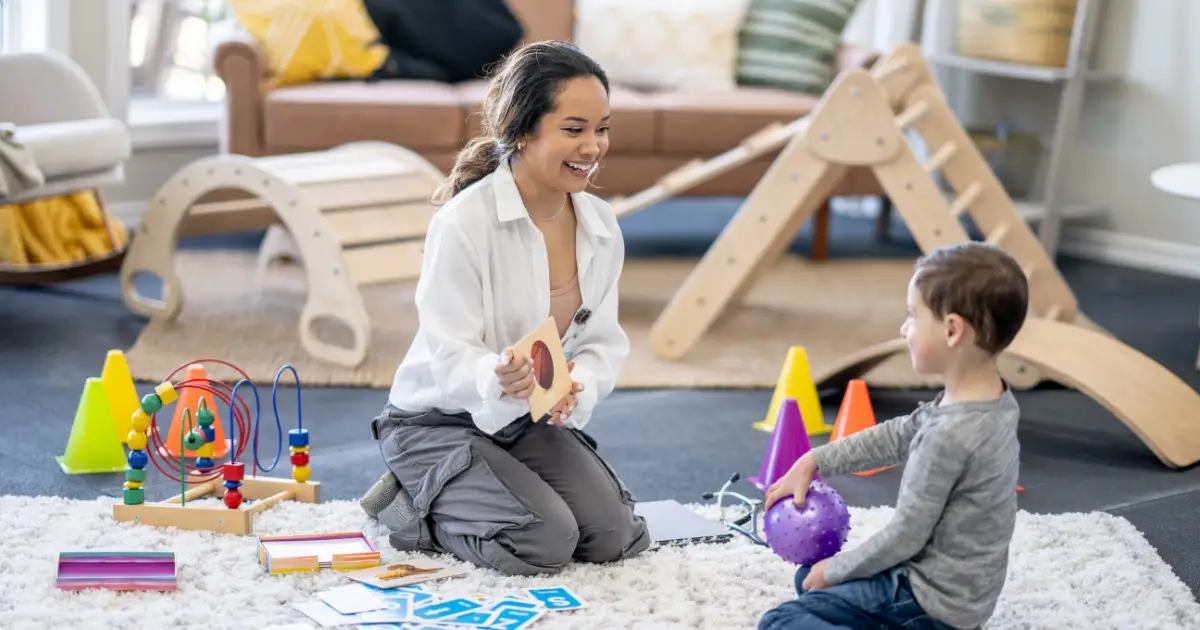
When children experience emotional distress or trauma, they often lack the words to explain what they are going through. Unlike adults, who can articulate feelings through conversation, children communicate most naturally through play. This is where play therapy for children becomes a powerful and evidence-based approach to healing.
At RMPS, we understand that children don’t just “talk out” their struggles; they play them out. Through carefully guided therapeutic play, children can process difficult experiences, express emotions safely, and rebuild a sense of control and resilience.
In this blog, we explore what play therapy is, how it works, and why it is one of the most effective forms of child trauma therapy.
What Is Play Therapy?
Play therapy is a structured, evidence-based therapeutic approach that uses play as the primary medium for communication and healing. It is typically used with children aged 3 to 12, though it can be adapted for older individuals as well.
Instead of relying on verbal expression, therapists use toys, games, art materials, and imaginative play to help children explore their thoughts and feelings. These tools allow children to express what they may not yet have the language or emotional awareness to communicate directly.
According to the Association for Play Therapy (APT), play therapy is defined as a systematic use of a theoretical model to establish an interpersonal process wherein trained therapists use the therapeutic powers of play to help clients prevent or resolve psychosocial difficulties.
Research by Bratton et al. (2005) found that play therapy demonstrates a statistically significant positive effect on children’s emotional and behavioural outcomes, with stronger effects observed when parents are actively involved.
At RMPS, play therapy is not simply “playing with toys.” It is a carefully guided process grounded in psychological theory, developmental science, and trauma-informed care.
Why Play Is the Natural Language of Children
Children experience the world differently than adults. Their cognitive and emotional systems are still developing, which means they often process experiences through sensory and symbolic means rather than abstract reasoning.
Play provides a safe psychological distance. A child might not be able to say, “I feel scared and unsafe,” but they may act out a story where a character is in danger and needs protection. This symbolic expression allows therapists to understand the child’s internal world.
Neuroscience supports this approach. Research by Panksepp (2007) highlights that play activates brain systems associated with emotional regulation, social bonding, and learning. Additionally, Perry (2006) emphasizes that trauma impacts lower brain regions involved in survival responses, making non-verbal, sensory-based therapies like play particularly effective.
In essence, play therapy meets children where they are developmentally and neurologically.
How Play Therapy Works
At RMPS, play therapy sessions are thoughtfully structured using evidence-informed frameworks, including Adlerian Play Therapy principles and the Play Therapy Dimensions Model, while still allowing children to express themselves naturally through play. Each item of the play is intentionally selected to facilitate emotional expression.
This means we don’t take a one-size-fits-all approach. We actively consider how directive or non-directive to be, whether a child needs emotional expression or skill-building, and how to gently explore the underlying beliefs shaping their behaviour.
This structured yet flexible approach allows us to move beyond general play-based support and provide more targeted, meaningful therapeutic change.
There are two primary approaches:
Child-Centred Play Therapy
In this approach, the child leads the session while the therapist follows, observes, and reflects. The therapist provides a safe and accepting environment, allowing the child to explore freely.
This method is rooted in the work of Virginia Axline (1947), who emphasized unconditional positive regard and the child’s innate capacity for growth.
Directive Play Therapy
Here, the therapist takes a more active role, guiding the child through specific activities designed to address particular issues, such as trauma, anxiety, or behavioural challenges.
Both approaches are used at RMPS depending on the child’s needs, developmental stage, and presenting concerns.
What Happens in a Play Therapy Session?
A typical session may look simple from the outside, but it is deeply intentional.
A child might:
- Use figurines to recreate a stressful event
- Draw or paint emotions they cannot verbalize
- Engage in role-play scenarios
- Build stories in a sand tray
The therapist observes patterns, themes, and emotional cues while gently reflecting the child’s experience. For example, a therapist might say, “It looks like that character feels very alone,” helping the child begin to recognize and name their emotions.
Over time, children begin to:
- Develop emotional awareness
- Gain a sense of control over their experiences
- Learn healthier ways to cope
Landreth (2012) emphasizes that the therapeutic relationship itself is a key mechanism of change, providing safety, trust, and emotional validation.
How Play Therapy Helps Children Heal from Trauma
Trauma can overwhelm a child’s ability to cope, leaving them feeling unsafe, confused, or emotionally dysregulated. Common sources of trauma include abuse, neglect, grief and loss, accidents, medical experiences, or significant life changes.
Processing Traumatic Experiences
Children often replay traumatic events through play. While this may seem repetitive, it is actually a crucial part of processing. By revisiting the experience in a safe environment, the child can gradually make sense of what happened.
Research by Gil (2017) shows that trauma-focused play therapy helps children reorganize traumatic memories, reducing symptoms such as anxiety, nightmares, and behavioural difficulties.
Restoring a Sense of Control
Trauma often leaves children feeling powerless. In play therapy, they regain control by directing the narrative. They decide what happens, who is safe, and how situations resolve.
This sense of agency is critical for healing. According to van der Kolk (2014), restoring control is a key component of trauma recovery.
Regulating Emotions
Traumatized children may experience intense emotions such as fear, anger, or sadness. Play therapy provides a safe outlet for these feelings.
Through repeated experiences of expression and validation, children learn to regulate their emotional responses more effectively.
Building Secure Relationships
The therapeutic relationship becomes a model for safe, trusting connections. This is especially important for children whose trauma involves relational harm.
Attachment-based research (Bowlby, 1988) highlights the importance of secure relationships in emotional development and recovery.
Benefits of Play Therapy
The benefits of play therapy extend beyond trauma recovery and support overall emotional and behavioural development.
Improved Emotional Expression
Children learn to identify and express their feelings in healthy ways, reducing internal distress.
Reduced Anxiety and Behavioural Issues
Studies show significant reductions in anxiety, aggression, and oppositional behaviours following play therapy interventions (Ray et al., 2015).
Enhanced Problem-Solving Skills
Through play scenarios, children practice navigating challenges and exploring solutions.
Strengthened Self-Esteem
As children gain mastery and understanding, their confidence and self-worth improve.
Better Social Skills
Play therapy helps children develop empathy, cooperation, and communication skills.
At RMPS, these outcomes are consistently observed when therapy is tailored to the child’s individual needs and supported by family involvement.
The Role of Parents in Play Therapy
Play therapy is most effective when parents are part of the process. While sessions are typically conducted one-on-one with the child, therapists often work closely with parents to support progress at home.
Parent involvement may include:
- Feedback sessions to discuss progress
- Guidance on responding to behaviours
- Strategies to strengthen parent-child relationships
Filial therapy, a form of play therapy that trains parents to conduct therapeutic play sessions at home, has been shown to significantly enhance outcomes (Bratton et al., 2005).
At RMPS, we view parents as essential partners in the therapeutic journey.
Is Play Therapy Right for Your Child?
Play therapy can benefit children experiencing a wide range of challenges, including:
- Trauma and adverse childhood experiences
- Anxiety and depression
- Behavioural difficulties
- Social challenges
- Family transitions such as divorce or relocation
- Grief and loss
If your child struggles to express emotions verbally or shows changes in behaviour, mood, or functioning, play therapy may be an effective intervention.
Why Play Therapy Is Backed by Science
Play therapy is not just a gentle or creative approach—it is strongly supported by research.
A meta-analysis by Bratton et al. (2005), reviewing 93 studies, found that play therapy has a moderate to large positive effect on children’s outcomes, with an effect size comparable to other well-established therapies.
Further research by Lin and Bratton (2015) confirmed its effectiveness across diverse populations and settings, including schools and clinical environments.
Neurobiological studies also support its mechanisms. Play engages brain regions involved in emotional regulation, memory integration, and stress reduction, making it particularly effective for trauma recovery (Perry, 2006; van der Kolk, 2014).
RMPS Approach to Play Therapy
At RMPS, our approach to child trauma therapy is grounded in evidence-based practices, cultural sensitivity, and individualized care.
We focus on:
- Creating a safe, child-friendly therapeutic environment
- Using developmentally appropriate interventions
- Collaborating closely with families
- Integrating trauma-informed principles
Our goal is not only to help children heal from past experiences but also to equip them with lifelong emotional skills.
Conclusion
Play therapy offers children a powerful pathway to healing. One that respects their developmental stage, honours their experiences, and empowers them to process emotions in a safe and meaningful way.
By allowing children to communicate through play, therapists can access deeper layers of emotional experience that might otherwise remain hidden. The result is not just symptom relief, but genuine growth, resilience, and emotional well-being.
If you are considering play therapy for children, early intervention can make a profound difference. At Rocky Mountain Psychological Services, we are committed to supporting children and families through compassionate, evidence-based care.
References
- Axline, V. M. (1947). Play Therapy. Houghton Mifflin.
- Bowlby, J. (1988). A Secure Base: Parent-Child Attachment and Healthy Human Development.
- Bratton, S. C., Ray, D., Rhine, T., & Jones, L. (2005). The efficacy of play therapy with children: A meta-analytic review. Professional Psychology: Research and Practice, 36(4), 376–390.
- Gil, E. (2017). Post-Traumatic Play in Children. Guilford Press.
- Landreth, G. L. (2012). Play Therapy: The Art of the Relationship.
- Lin, Y. W., & Bratton, S. C. (2015). A meta-analytic review of child-centered play therapy approaches. Journal of Counseling & Development.
- Panksepp, J. (2007). Can play diminish ADHD and facilitate the construction of the social brain? American Journal of Play.
- Perry, B. D. (2006). Applying principles of neurodevelopment to clinical work with maltreated children.
- Ray, D. C., et al. (2015). Effectiveness of play therapy. Journal of Counseling & Development.
- van der Kolk, B. A. (2014). The Body Keeps the Score.