Table of Contents

Neurofeedback Calgary: Training the Brain to Regulate

Neurofeedback in Calgary has grown from a niche idea into an approach many families and individuals now ask about by name. Rocky Mountain Psychological Services offers neurofeedback as part of our broader commitment to evidence-informed, whole-person care. If you are curious about how training the brain’s own regulation might support attention, calm, or focus, understanding the basics is a good place to start.

This guide explains what neurofeedback is, how it works, and how it fits within a thoughtful plan of care.

What Neurofeedback Is

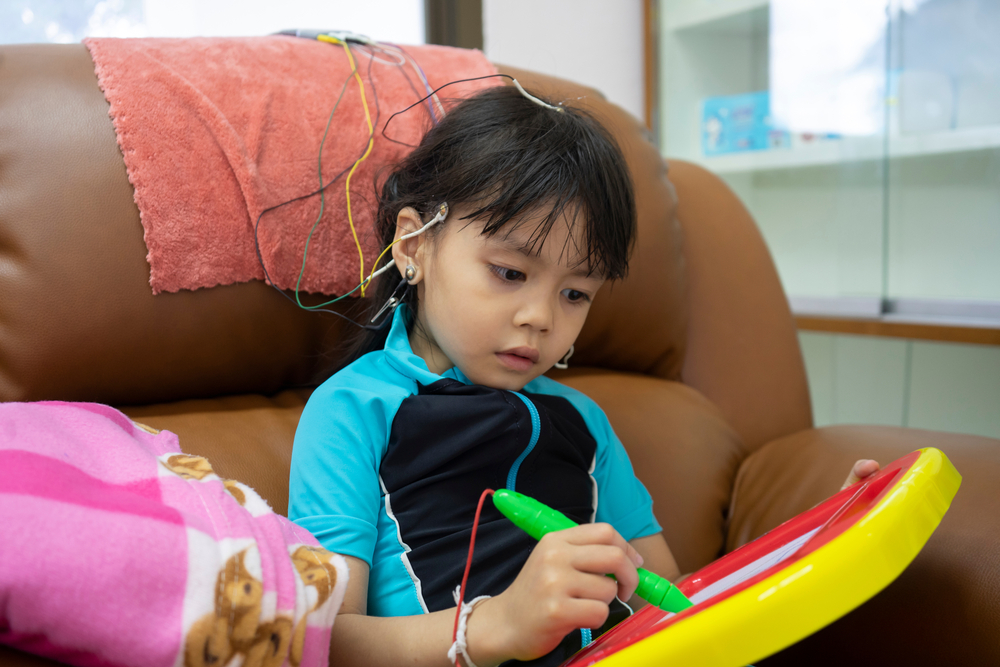
Neurofeedback is a non-invasive approach that helps the brain learn to regulate itself more effectively. Sensors placed on the scalp read the brain’s electrical activity, and the system translates that activity into feedback the person can perceive, often as sound or a visual display.

When the brain produces more balanced patterns, the feedback responds. Over repeated sessions, the brain gradually learns to favour those patterns on its own. It is a bit like a mirror for brain activity, giving the brain information it does not normally have access to, so it can adjust.

Importantly, neurofeedback does not send anything into the body. Nothing is forced; the brain does the learning. That gentle, self-directed quality is part of why interest in neurofeedback Calgary residents are exploring continues to grow.

How Neurofeedback Fits Into Care

Neurofeedback is rarely a standalone answer. At its best, it is one tool within a broader, individualized plan shaped by a psychologist who understands the whole person. That is the approach we take: neurofeedback is considered alongside assessment, therapy, and the goals that matter to the individual and family.

Because the brain learns gradually, neurofeedback typically involves a series of sessions rather than a single visit. The feedback is consistent and calm, and most people find the experience comfortable.

Neurofeedback at a Glance

Feature What it means
Non-invasive Sensors read activity; nothing enters the body
Self-regulating The brain learns to adjust its own patterns
Gradual Benefits build over a series of sessions
Integrated Works best within a broader plan of care
Comfortable Sessions are calm and well tolerated

A Thoughtful, Whole-Person Approach

The most important part of considering neurofeedback is talking with a qualified clinician about whether it fits your situation. Everyone is different, and a responsible approach starts with understanding before recommending anything.

Our neurotherapy services are delivered by experienced professionals who consider neurofeedback as part of a fuller picture, not a quick fix. For families exploring attention and regulation concerns, our ADHD assessment services can provide the clarity that guides a plan. You can learn more about our clinicians and their approach before you begin. General guidance on mental health care from the Canadian Psychological Association is also a helpful background resource.

Neurofeedback reflects a core belief we hold: that support works best when it is grounded in understanding and tailored to the individual.

Frequently Asked Questions

What is neurofeedback?
It is a non-invasive approach that uses real-time information about brain activity to help the brain learn to self-regulate, using feedback through sound or visuals to gently guide more balanced patterns.

What is neurofeedback used for?
It is explored for concerns related to attention, regulation, and stress, usually as part of a broader plan rather than a standalone cure. A psychologist can advise whether it fits.

Is neurofeedback painful or invasive?
No. It is non-invasive, with no electrical current entering the body. Sensors simply read activity at the scalp, and most people find sessions calm and comfortable.

How many neurofeedback sessions are typical?
It usually involves a series of sessions rather than one visit, since the brain learns gradually. The number depends on the individual and goals, which your clinician will discuss.

Explore Neurofeedback in Calgary

Rocky Mountain Psychological Services is located at Clennan Square, Suite 212, 110 – 11 Ave SW, Calgary, AB T2R 0B8. Call (403) 245-5981 or email intake@rmpsychservices.com to arrange an appointment. Any fees are discussed directly with our intake team once we understand what you are looking for.

MacKenzie Ebel

MacKenzie is a Psychometrist/Psychological Assistant at RMPS. She completed her Bachelor of Arts in Psychology at Princeton University, where she also played 4 years for the women’s ice hockey team. She recently completed her Masters in Counselling Psychology through City University of Seattle. MacKenzie has worked with children, youth, and their families in a number of settings, through coaching, as a behavioural aid, and counselling through her internship placement. She is excited to continue learning about assessment administration, neurofeedback, and play therapy practices at RMPS! Currently, she is part of the assessment and neurotherapy team, as she completes her final capstone assignment and intends to join our counselling team as a Registered Provisional Psychologist.

Tammy Thomson

Tammy is a graduate of the Master of Arts in Counselling Psychology (MACP) program at Yorkville University and is trained at the master’s level in art therapy as a professional art psychotherapist and member of the Canadian Art Therapy Association. She brings more than 20 years of experience working with children, teens, and families in child development settings, children’s hospitals, and schools as an early childhood educator and elementary teacher. She completed a Bachelor of Applied Science specializing in Child Development Studies at the University of Guelph, Ontario and holds a Graduate Diploma of Teaching and Learning from the University of Canterbury in Christchurch, New Zealand. Tammy is a member of the Canadian Counsellor and Psychotherapy Association and College of Alberta Psychologists while pursuing her next goal of registration as a provisional psychologist. Tammy values a client-centered approach using play therapy and the expressive arts to support those who may find it difficult to articulate their thoughts and feelings with words. Children and families do not need any skill or prior art experience and the art studio is a safe place where children can gain a sense of independence, greater emotional regulation, and confidence through self-exploration. Expressive interventions in art therapy can treat behavioural issues, anxiety, depression, ADHD, autism, learning disabilities, physical and developmental disabilities, and attachment difficulties. As a parent of three young children herself, Tammy understands the complexities of family life using compassion to help parents feel more confident in their role of raising a successful family.

Raquel Freitas

Raquel is an Office Administrator at RMPS. Back in Brazil, her home country, she graduated as a Psychologist and worked as a clinician for the past 5 years. Although she loved working with children and adults, she discovered a new passion: manage the administrative tasks that keep the business running. 

As someone who is passionate about learning new things and developing new skills, with the career transition also came the decision to live abroad and explore a new culture. To serve empathetically and connect with people is Raquel’s main personal and professional goal.

Emma Donnelly

Emma is a Registered Psychologist with the College of Alberta Psychologists. She completed her Bachelor of Arts in Psychology in her hometown at Brandon University, after which she moved to Calgary to earn her Master’s of Science in School and Applied Child Psychology at the University of Calgary. Emma has a passion for working with children and families and has experience doing so in a number of settings, including schools, homes, early intervention programs, and within the community. She specializes in assessment, including psychoeduational, social-emotional-behavioural, and autism assessment. Emma uses a client centred approach to counselling, supported by cognitive behavioural therapy, as well as play-based and attachment-based techniques. She believes in meeting clients where they are at and prides herself in working together with her clients to achieve their goals, improve their functioning, and enjoy their daily life.

Amanda Stoner

Amanda is a Registered Psychologist with the College of Alberta Psychologists. Amanda earned her doctoral degree in Psychology at Brock University in Ontario in 2017, with a specialization in developmental psychology. Amanda provides formal assessment services at RMPS. 

Since 2009, Amanda has received formal training and work experience in private practice settings in conducting psycho-educational assessments for students ranging from preschool through university. Amanda is skilled at test administration, interpretation of data, and report writing for various referral questions including ADHD, Learning Disorders, Autism Spectrum Disorder, Anxiety, Giftedness, and Intellectual Disabilities. Amanda enjoys working with people of all ages from diverse backgrounds, and she tries to make the testing environment feel relaxed and comfortable while maintaining integrity in testing protocol.

Denise Riewe

Denise has completed a Bachelor of Health Sciences through the University of Lethbridge and a Master of Counselling with Athabasca University. She is a Registered Provisional Psychologist with the College of Alberta Psychologists and a member of the Psychological Association of Alberta. Denise has over 9 years of experience supporting children, youth and their families in both residential and community-based practices. Denise is experienced in working with high and at-risk youth, supporting children and their families with strength-based approaches. She practices from a client-center approach supported by Cognitive Behaviour Therapy, Dialectical Behaviour Therapy, Theraplay, and other play and art-based modalities.

John Pynn

John is a Registered Provisional Psychologist with the College of Alberta Psychologists. He completed his Master of Arts in Counselling Psychology at Yorkville University. He brings more than 20 years of experience working with children, teens, and families in a variety of settings. He brings a relaxed and collaborative atmosphere to sessions. John uses an integrated counselling approach including client-centred, Cognitive Behavioural Therapy (CBT), and Solution-Focussed therapy (SFT) to find the best-fit for clients. He has experience with a variety of mental health concerns including anxiety, depression, anger, self-
esteem, relationships, parenting, ADHD, grief/loss, addictions, and trauma. This broad experience comes from working in schools, social service agencies, group-care, and clinical settings. He also draws from the practical experience of being a parent to two teenagers as well as a husband. Supporting and empowering clients with mental health concerns is something John genuinely enjoys. John also provides counselling for adults and holds a Gottman level 1 certification for couples therapy.

Zara Crasto

Zara is a Psychometrist/Psychological Assistant at RMPS. She completed her Bachelor of Science in Psychology at the University of Calgary and her Graduate Diploma in Psychological Assessment at Concordia University of Edmonton. 

Zara has spent over five years working alongside children, adolescents, and their families in a variety of settings. These include public and private schools, in-home support, residential programs, early-intervention programs, and non-profit organizations. Currently, Zara is part of the assessment and neurotherapy team. As a lifelong learner, Zara plans to go back to graduate school and eventually become a psychologist one day.

Kellie Lanktree

Kellie is a Registered Psychologist with the College of Alberta Psychologists. She completed a Bachelor of Child and Youth Care with the University of Victoria and a Master of Education in Counselling Psychology through the University of Lethbridge. Kellie has over 10 years experience supporting children and youth with developmental disorders/delays and their families. Kellie has experience working in schools, clinical settings, and within homes to provide support and therapeutic interventions. Through her time at RMPS, Kellie has also gained experience in helping individuals affected by trauma, grief/loss, separations, emotional dysregulation, depression, and anxiety. Kellie practices through developmental, attachment-based and trauma-informed lenses, and draws from a variety of play-based approaches such as Synergetic Play Therapy, Child-centered play therapy, DIR/Floortime, art-based mediums, and mindfulness-based practices. Kellie also provides Neurofeedback therapy, and is working on receiving her certification through BCIA. Kellie believes in meeting children and their families where they are at and that there is no “one size fits all” for therapy.