
When a child receives a diagnosis of autism, it often brings clarity and direction for families who have been searching for answers. Intervention begins, supports are put in place, and there is a sense of forward movement. Yet for many families, progress does not fully match expectations. Despite consistent therapy, their child may still struggle with completing tasks, staying organized, managing emotions, or functioning independently in daily life.
At Rocky Mountain Psychological Services, this is a pattern we see often, and it points to an important but sometimes overlooked reality: autism may not be the only factor influencing a child’s development. A significant number of children on the autism spectrum also experience Attention-Deficit/Hyperactivity Disorder (ADHD). When ADHD goes unrecognized, even well-designed autism interventions can fall short of addressing the child’s full range of needs.
Understanding how autism and ADHD interact is essential for improving follow-through, independence, and overall daily functioning.
The Overlap Between Autism and ADHD
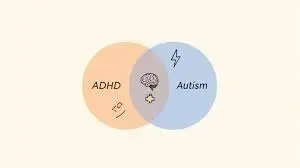
The relationship between autism and ADHD is more common than many people realize. Research suggests that anywhere from 30% to 80% of individuals with autism also meet criteria for ADHD (Leitner, 2014). This overlap reflects shared neurological pathways and developmental challenges, particularly in areas involving attention, regulation, and executive functioning.
Historically, clinicians were hesitant to diagnose both conditions in the same individual. Before the release of the DSM-5, diagnostic guidelines discouraged dual diagnoses, which led to many children receiving only a partial understanding of their difficulties. As a result, treatment approaches often addressed one condition while overlooking the other.
Today, there is a clearer understanding that autism and ADHD are distinct yet frequently co-occurring conditions. Autism primarily affects social communication, sensory processing, and behavioral patterns, while ADHD impacts attention, impulse control, and the ability to regulate effort. When both are present, their interaction creates a more complex profile that requires a more nuanced approach to intervention.
Why Autism-Focused Treatment Alone Can Fall Short
Autism interventions are often designed to support communication, social interaction, and behavioral flexibility. These are essential areas of development, and many children benefit greatly from these supports. However, when ADHD is also present, challenges with follow-through and consistency can persist despite gains in understanding and skill development.
A child may learn how to complete a task, understand expectations, and even demonstrate the skill in structured settings, yet still struggle to initiate or complete the same task independently. This disconnect is frequently rooted in executive functioning difficulties, which are more strongly associated with ADHD.
Research by Craig et al. (2016) highlights that children with co-occurring autism and ADHD experience significantly greater impairments in executive functioning than those with autism alone. These challenges are not simply an extension of autism traits; they represent an additional layer of difficulty that must be addressed directly.
Without recognizing ADHD, it can appear as though a child is not applying what they have learned, when in reality, they are struggling with the cognitive processes required to act on that knowledge.
Executive Functioning Difficulties: The Core Challenge
Executive functioning refers to the mental processes that allow individuals to plan, organize, initiate, and complete tasks. These processes also support emotional regulation, flexible thinking, and the ability to sustain attention over time.
For children with both autism and ADHD, executive functioning difficulties often become the most significant barrier to independence. While autism may contribute to rigidity or challenges with flexibility, ADHD intensifies difficulties with starting tasks, maintaining focus, and managing effort.
Willcutt et al. (2005) found that deficits in executive functioning, particularly in working memory and inhibitory control, are central to ADHD. When these deficits are combined with autism-related challenges, children may experience a level of difficulty that goes beyond what would be expected from either condition alone.
In practical terms, this means that a child may fully understand what is expected of them but still feel overwhelmed when trying to begin. They may need repeated prompts to complete even familiar routines, struggle with transitions throughout the day, or become emotionally dysregulated when tasks feel too demanding.
These difficulties are not a reflection of motivation or behavior choices. They are rooted in how the brain processes and organizes information.
The Impact on Daily Life and Independence
At RMPS, families often describe a similar set of concerns. Their child may rely heavily on reminders, struggle to complete routines without support, or become easily overwhelmed by everyday demands. Tasks such as getting ready for school, completing homework, or transitioning between activities can turn into ongoing challenges.
Over time, these difficulties can have a significant impact on a child’s sense of independence. When a child consistently struggles to follow through, they may begin to depend more on adults for guidance and support. This can limit opportunities to build confidence and develop self-sufficiency.
Research by Antshel et al. (2016) indicates that children with both autism and ADHD are more likely to experience academic difficulties, social challenges, and emotional regulation issues compared to those with autism alone. These challenges often persist into adolescence, affecting not only school performance but also relationships and overall well-being.
Without appropriate support, children may internalize these struggles, leading to frustration, low self-esteem, and a belief that they are incapable of meeting expectations.
The Importance of Comprehensive Assessment
One of the most important steps in supporting a child effectively is gaining a clear and complete understanding of their needs. At RMPS, this begins with a comprehensive assessment that looks beyond a single diagnosis and examines how a child functions across different areas of life.
A psychoeducational assessment provides valuable insight into attention, executive functioning, learning patterns, and emotional regulation. It allows clinicians to identify whether ADHD is contributing to the challenges a child is experiencing and to what extent executive functioning difficulties are impacting daily life.
Grzadzinski et al. (2011) emphasize that accurately identifying co-occurring conditions is essential for developing effective intervention strategies. Without this understanding, treatment plans may address only part of the problem, limiting their overall effectiveness.
A thorough assessment ensures that interventions are not only targeted but also practical and relevant to the child’s everyday experiences.
A More Integrated Approach to Treatment
When autism and ADHD co-occur, treatment must go beyond a single-focus approach. Addressing both conditions simultaneously allows for more meaningful and sustainable progress.
At RMPS, intervention is designed to bridge the gap between knowing and doing. This involves supporting children not only in learning skills but also in applying them consistently in real-world situations. Executive functioning support becomes a central component of treatment, helping children develop strategies for planning, organizing, and completing tasks.
Environmental supports, such as structured routines and visual systems, can reduce the cognitive load placed on the child. Parent coaching also plays a key role, as caregivers learn how to provide the right level of support while gradually promoting independence.
In some cases, medication may be considered as part of an ADHD treatment plan. Research from the Research Units on Pediatric Psychopharmacology Autism Network (2005) shows that stimulant medications can be effective in improving attention and reducing hyperactivity in children with co-occurring autism and ADHD, although responses may vary.
The goal is not to treat diagnoses in isolation, but to support the whole child in a way that enhances their ability to function, adapt, and thrive.
Shifting the Narrative
A critical part of this process is changing how we interpret a child’s behavior. When a child struggles to follow through, it is easy to assume a lack of effort or motivation. However, in the context of co-occurring autism and ADHD, these challenges are better understood as neurological in nature.
Barkley (2012) describes ADHD as a disorder of performance rather than knowledge. Children often know what they need to do, but their difficulty lies in executing those actions consistently. Recognizing this distinction allows parents and professionals to respond with support rather than frustration.
This shift in perspective can have a profound impact on a child’s experience. When expectations are paired with appropriate supports, children are more likely to succeed, build confidence, and develop a stronger sense of self.
The RMPS Perspective
At RMPS, we believe that understanding the full picture is essential for meaningful progress. Every child is unique, and effective intervention requires looking beyond labels to understand how different factors interact and influence daily functioning.
When autism and ADHD co-occur, our approach focuses on identifying the underlying challenges that impact independence and follow-through. By addressing executive functioning difficulties alongside autism-related needs, we are able to create more comprehensive and effective treatment plans.
Our goal is to help children move from reliance on constant support toward greater independence. This involves not only building skills but also ensuring that those skills can be applied in everyday life.
Through assessment, individualized intervention, and ongoing collaboration with families, we aim to support children in reaching their full potential in a way that is both practical and sustainable.
Final Thoughts
Treating autism alone may not fully address the challenges a child is experiencing, particularly when ADHD is also part of the picture. Executive functioning difficulties can quietly limit progress, making it difficult for children to apply what they have learned and function independently.
Recognizing and addressing co-occurring ADHD allows for a more complete understanding of a child’s needs. It opens the door to interventions that support not just skill development, but real-world application, consistency, and independence.
For families who feel that something is still missing despite ongoing support, exploring the possibility of ADHD may provide important answers. With the right approach, children can make meaningful progress, develop confidence, and build the skills they need to navigate daily life successfully.
References
Antshel, K. M., Zhang-James, Y., Wagner, K. E., Ledesma, A., & Faraone, S. V. (2016). An update on the comorbidity of ADHD and autism spectrum disorder: A focus on clinical management. Expert Review of Neurotherapeutics, 16(3), 279–293.
Barkley, R. A. (2012). Executive functions: What they are, how they work, and why they evolved. Guilford Press.
Craig, F., Lamanna, A. L., Margari, F., Matera, E., Simone, M., & Margari, L. (2016). Overlap between autism spectrum disorders and attention deficit hyperactivity disorder: Searching for distinctive/common clinical features. Autism Research, 9(6), 604–614.
Grzadzinski, R., Dick, C., Lord, C., & Bishop, S. (2011). Parent-reported and clinician-observed autism symptoms in children with ADHD. Journal of Abnormal Child Psychology, 39(7), 1047–1058.
Leitner, Y. (2014). The co-occurrence of autism and attention deficit hyperactivity disorder in children—What do we know? Frontiers in Human Neuroscience, 8, 268.
Research Units on Pediatric Psychopharmacology Autism Network. (2005). Randomized, controlled, crossover trial of methylphenidate in pervasive developmental disorders with hyperactivity. Archives of General Psychiatry, 62(11), 1266–1274.
Willcutt, E. G., Doyle, A. E., Nigg, J. T., Faraone, S. V., & Pennington, B. F. (2005). Validity of the executive function theory of ADHD: A meta-analytic review. Biological Psychiatry, 57(11), 1336–1346.