At Rocky Mountain Psychological Services (RMPS), we’re committed to helping our clients harness the full potential of their minds and bodies. One of the most promising avenues we offer is neurofeedback. It’s a non-invasive brain-training method that supports wellness, resilience, and peak performance. In this blog, we’ll explore what neurofeedback is, how it works, the research behind it, how it can support wellness and performance, and why choosing a provider like RMPS matters.
What is neurofeedback?
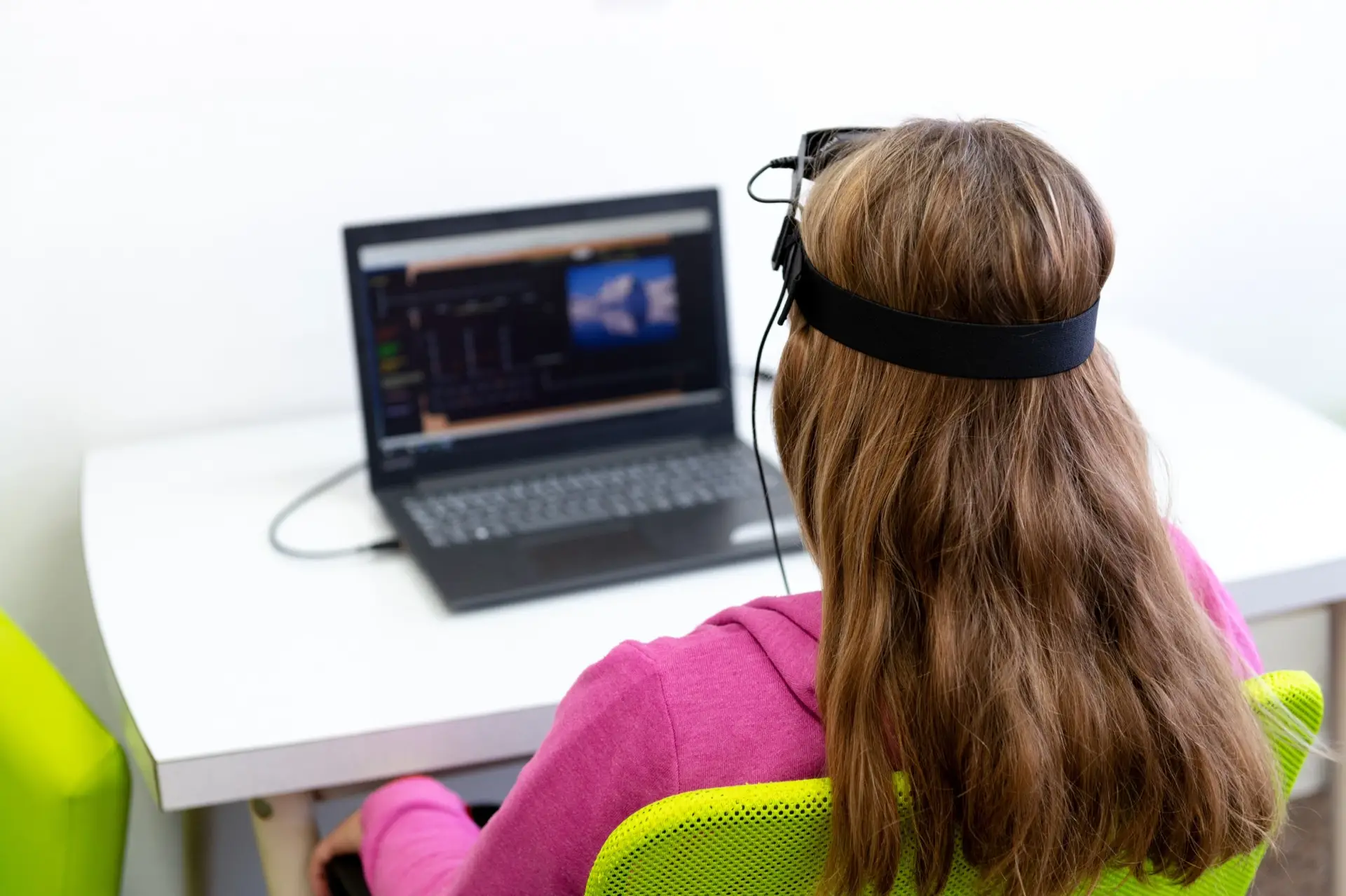
Neurofeedback (also called EEG biofeedback or brain-wave training) is a method in which sensors placed on the scalp monitor your brain’s electrical activity in real time, and feed that information back to you (visually, auditorily, or both) so that your brain can learn to adjust and regulate itself more effectively.
At RMPS, when we speak about neurofeedback, we emphasise:
- Brain-self-regulation: The brain isn’t passively “treated”, but you actively participate.
- Non-invasive & drug-free: There are no medications or implants involved, just brain-training.
- Performance-oriented: It’s not only for clinical conditions, but also for individuals seeking improved focus, wellness, and resilience.
A brief history of the field
Neurofeedback began gaining traction in the 1960s with early EEG studies (for example by M. Barry Sterman) showing that animals (and later humans) could learn to alter specific brain-wave rhythms. From there it expanded into therapeutic and performance domains.
A 2024 bibliometric study noted that neurofeedback research has shown potential in improving cognitive performance, treating neurology/psychiatric disorders, and enhancing brain function more broadly. (Frontiers, 2024)
How does neurofeedback work?
Here’s a simplified step-by-step process of how a neurofeedback session often works (and how we implement it at RMPS):
- Initial assessment / brain-mapping
At RMPS, we typically begin with an assessment of your brain-wave patterns (via EEG) as you sit quietly or perform tasks, to establish a baseline. - Selecting a training protocol
Based on your goals (e.g., improved focus, calmer stress response, better performance), we choose a neurofeedback protocol targeting certain brain-wave frequencies (for example, increasing sensorimotor rhythm (SMR) or reducing excess theta waves) or connectivity patterns. - Feedback loop
With electrodes on the scalp, you engage in a simple, comfortable task (could be watching a screen, listening to tones). When your brain achieves a “desired” pattern (as defined by the protocol), the feedback (audio/visual) rewards it. E.g., the screen becomes clearer, the tone becomes more pleasant. That reward signals to your brain: “Yes, this pattern is desirable.” Over time, your brain learns to favour that pattern. - Repetition and learning
Because of neuroplasticity, the brain’s ability to change with experience, repeated sessions enable lasting change in brain-wave patterns and self-regulation. - Integration into daily life
The goal is not just session-by-session change, but translating that improved regulation into real-world wellness and performance (better sleep, less stress reactivity, improved attention, etc.).
Why the brain tracks matter
- Brain-waves such as theta, alpha, beta, and SMR correspond to different states of attention, relaxation, vigilance, and sleepiness. For example, excessive theta might lead to distractibility; too much fast beta might mean anxiety. Through neurofeedback, you can train toward a more optimal balance.
- The more regulated your brain becomes, the more smoothly your nervous system, emotional regulation, and cognitive functions tend to run.
Benefits: Wellness & Performance
Let’s break this into two categories. Wellness (mental, emotional, physiological) and performance (cognitive, athletic/occupational, life-balance). At RMPS, we often see overlap. Better wellness supports better performance, and vice versa.
Wellness benefits
- Improved emotional regulation / reduced stress & anxiety: Neurofeedback helps the brain shift out of chronic hyper-arousal (fight/flight) or hypo-arousal (shutdown) states into more flexible, balanced states. (Delraybrainscience, 2024)
- Better sleep: Since brain-wave dysregulation often disrupts sleep onset and quality, training toward more optimal wave-patterns can support improved sleep hygiene. (Dr. Bojana, 2019)
- Enhanced resilience & long-term brain health: One article notes that neurofeedback “helps the brain operate more efficiently, laying the foundation for long-term wellness.” (NeuroHealth Associates, 2025)
- Cognitive clarity: People often report improved focus, faster mental processing, less “brain-fog” after a course of neurofeedback. For example, one study in aging adults found improvements in working memory. (ScienceDirect, 2025)
- Non-medication alternative or complement: Because it’s non-invasive and drug-free, neurofeedback can be used alongside therapy or medication, or sometimes as an alternative for those seeking less reliance on medication.
Performance benefits
- Attention & working memory: Studies have shown that neurofeedback can enhance attention, working memory, and executive function in healthy individuals as well as clinical populations. (ScienceDirect, 2024)
- Sports / skill performance: For athletes, performers, professionals under pressure, neurofeedback has been used for “peak performance” training, improving reaction time, focus under pressure, and consistency.
- Learning & mental speed: Some preliminary work suggests neurofeedback can support faster learning, new skill acquisition, memory consolidation, and mental flexibility. (NeuroHealth Associates, 2024)
- Competitive edge & life optimisation: At RMPS we often work with clients who are not just trying to “fix” something but to optimize. Better performance at work, improved life productivity, less downtime due to stress or mental fatigue.
Why Choose Neurofeedback at Rocky Mountain Psychological Services?
At RMPS, we believe in delivering neurofeedback in a way that maximises benefit, safety, and integration. Here’s why working with us is an excellent choice:
- Tailored protocols: Rather than “one-size-fits-all,” we design neurofeedback protocols based on your unique brain-wave profile, your goals (wellness vs performance vs both), and your lifestyle.
- Evidence-informed approach: We stay updated on the research (for example, the evolving studies on neurofeedback for cognitive enhancement and wellness).
- Integrated care: Neurofeedback is a tool, not a standalone magic pill. At RMPS we integrate with therapy, counselling, lifestyle factors (sleep, nutrition, movement), and performance coaching as needed.
- Monitoring & progress tracking: We monitor changes over time, adjust protocols as your brain adapts, and help you translate gains into daily life.
- Safety & professional standards: Neurofeedback is generally well tolerated but requires proper training, equipment, and professional oversight.
How to Get Started: What to Expect
Starting a neurofeedback program at RMPS typically involves the following steps:
- Initial consultation & brain-mapping: We review your health history, performance/wellness goals, and conduct an EEG assessment to identify patterns to train.
- Program design: Based on the mapping, we design a neurofeedback schedule (often 8-30 sessions depending on goals).
- Regular sessions: During each session you’ll wear EEG sensors, engage in feedback tasks, and gradually learn improved brain-wave regulation. Each session typically lasts 30-45 minutes.
- Re-assessment & translation: At intervals, we assess progress, review how changes are impacting your life (sleep, focus, mood, performance), and help you apply gains into your day-to-day.
- Maintenance & optimisation: Once you’ve achieved gains, we may recommend maintenance sessions or integrate the training into your broader wellness/performance plan.
Realistic expectations & timeframe
- Some clients report noticeable improvements after a few sessions, but sustained benefits often require consistency.
- Because research is still evolving, neurofeedback is best seen as part of a holistic wellness/performance plan, not a guarantee or cure-all.
- Costs/time commitment vary depending on goals, frequency, and the complexity of the brain-wave dysregulation being addressed.
Key Takeaways
- Neurofeedback is a powerful tool for brain-training, helping your brain regulate itself more effectively, which supports both wellness and performance.
- At RMPS, we emphasise personalised protocols, integrating neurofeedback into your overall mental health, wellness and performance plan.
- The research base is growing: there is solid evidence in areas like attention/working memory, cognitive enhancement, stress regulation, and wellness. (ScienceDirect, 2024)
- Neurofeedback is non-invasive, drug-free, and suitable for clients who want not only to manage symptoms but optimize their brain’s functioning for life and work.
- Getting started means assessment, commitment, and integration into your lifestyle with the support of skilled professionals.
Frequently Asked Questions
Q: Does neurofeedback work for everyone?
A: No method works 100 % of the time for every person. While many clients report significant improvements, outcomes depend on many factors including brain-wave responsiveness, consistency of training, lifestyle factors, and how neurofeedback is integrated into broader wellness/ performance strategies. Research acknowledges variation and calls for further study.
Q: Are there any risks or side effects?
A: Neurofeedback is generally safe and non-invasive. Some individuals may experience tiredness, headache, or temporary worsening of symptoms if the protocol isn’t well matched. Because brain-training impacts electrical activity, we proceed cautiously, especially if you have seizure disorders or significant neurological conditions.
Q: How many sessions will I need?
A: It depends on your goals. For wellness support or enhancement (e.g., better focus, stress-resilience), a shorter course (8-20 sessions) may suffice. For deeper or more complex concerns (e.g., longstanding brain-wave dysregulation, performance under extreme pressure), more sessions may be required. At RMPS we will review progress and adjust the plan as needed.
Q: Will this replace therapy or other supports?
A: Not necessarily. At RMPS we view neurofeedback as complementary to other therapies, coaching, lifestyle interventions and supports. If you’re working on emotional trauma, performance anxiety, or wellness goals, neurofeedback enhances your capacity. It doesn’t replace the value of talk therapy, behavioural strategies, or other medical/psychological supports.
Final Word
If you’re seeking a scientifically grounded, future-oriented way to optimize your brain’s functioning, improve focus, manage stress, enhance performance, support wellness, then neurofeedback offers a promising path. At Rocky Mountain Psychological Services in Calgary, we’re committed to guiding you through this process with the professional expertise, technological tools, and care to help you gain meaningful, enduring benefits.
If you’re ready to explore neurofeedback and see how it might fit into your wellness/performance plan, we’d love to welcome you for a consultation.